

Blog

Blog

What if you have Pronto...

But your reporting still runs in Excel?

Your business runs on Pronto. Multiple legal entities, all connected in one system.

In theory, you should be able to see performance for any single company, any combination, or the full consolidated group whenever you need to.

In practice, reality is different.

While Pronto holds the data, finance teams extracts and scheduled reports that are then transformed and consolidated in spreadsheets. One file is created for one legal entity, another for the next, and yet another to bring everything together. Formulas break. A renamed tab causes a link to fail. Last month’s formatting no longer matches this month’s. By the time the P&L, balance sheet, trial balance and departmental reports are consolidated, validated and presentation-ready, much of the reporting cycle has already been spent preparing numbers rather than analysing them.

What if it didn't have to work that way?

What if every legal entity connected in Pronto was also connected in your reporting — so you could switch between a single company, any combination, or the full consolidated view in one click, without rebuilding a single spreadsheet?

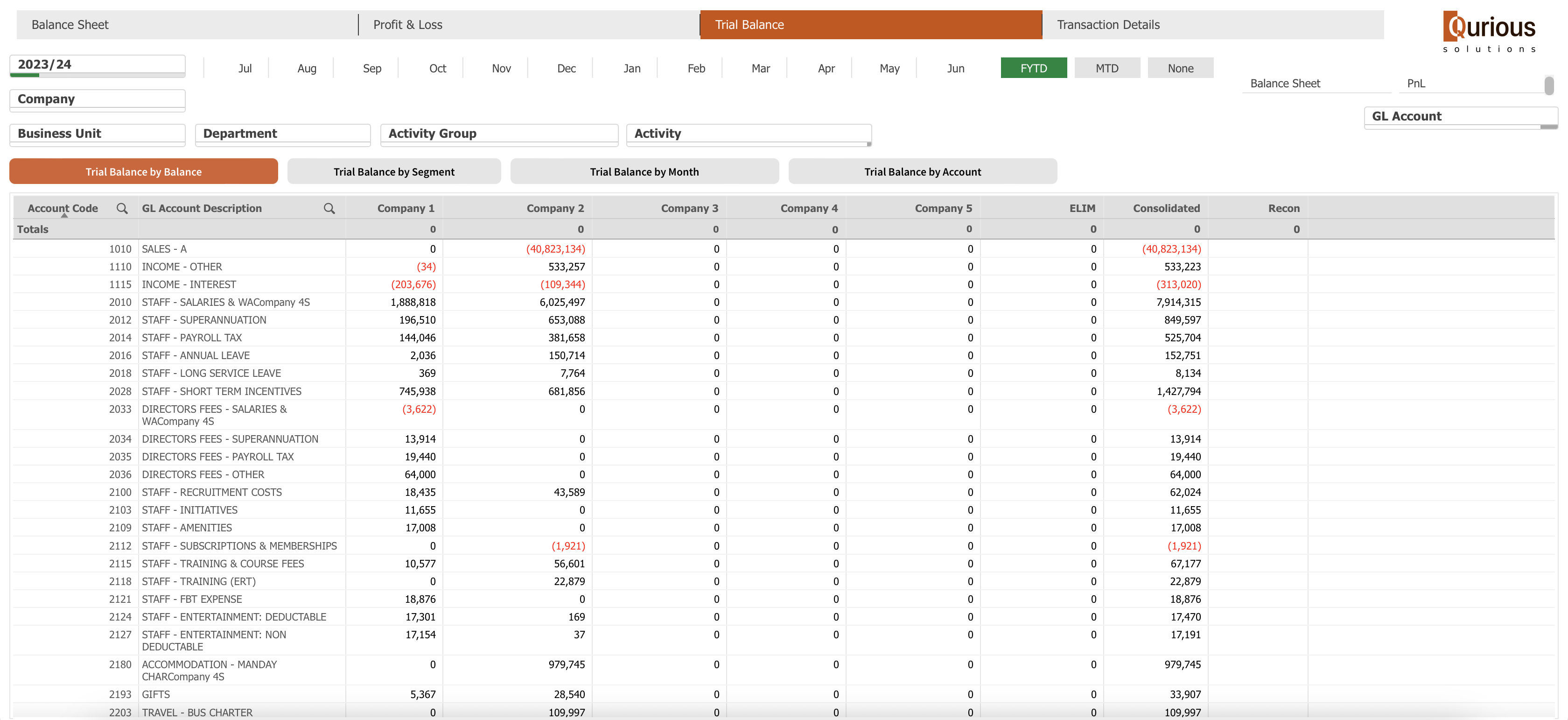
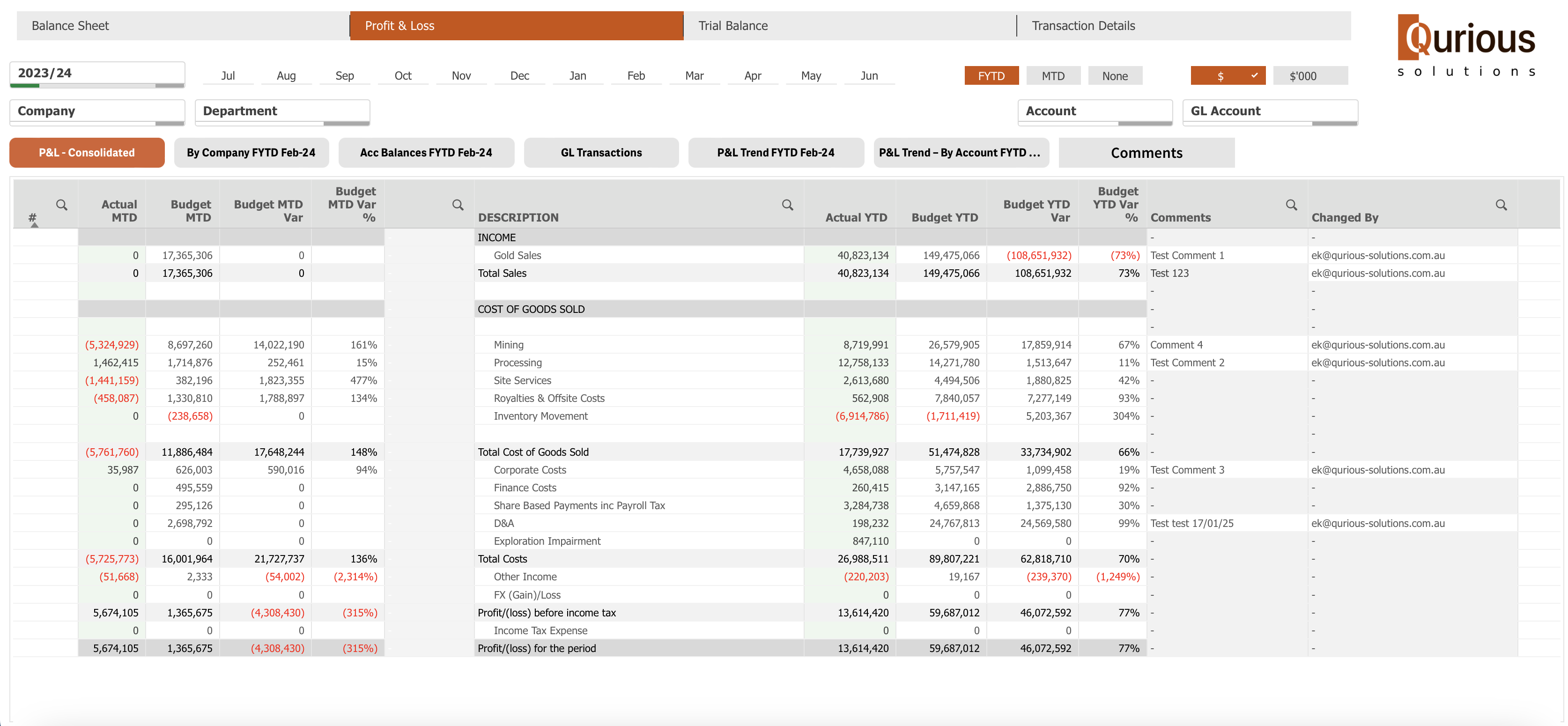
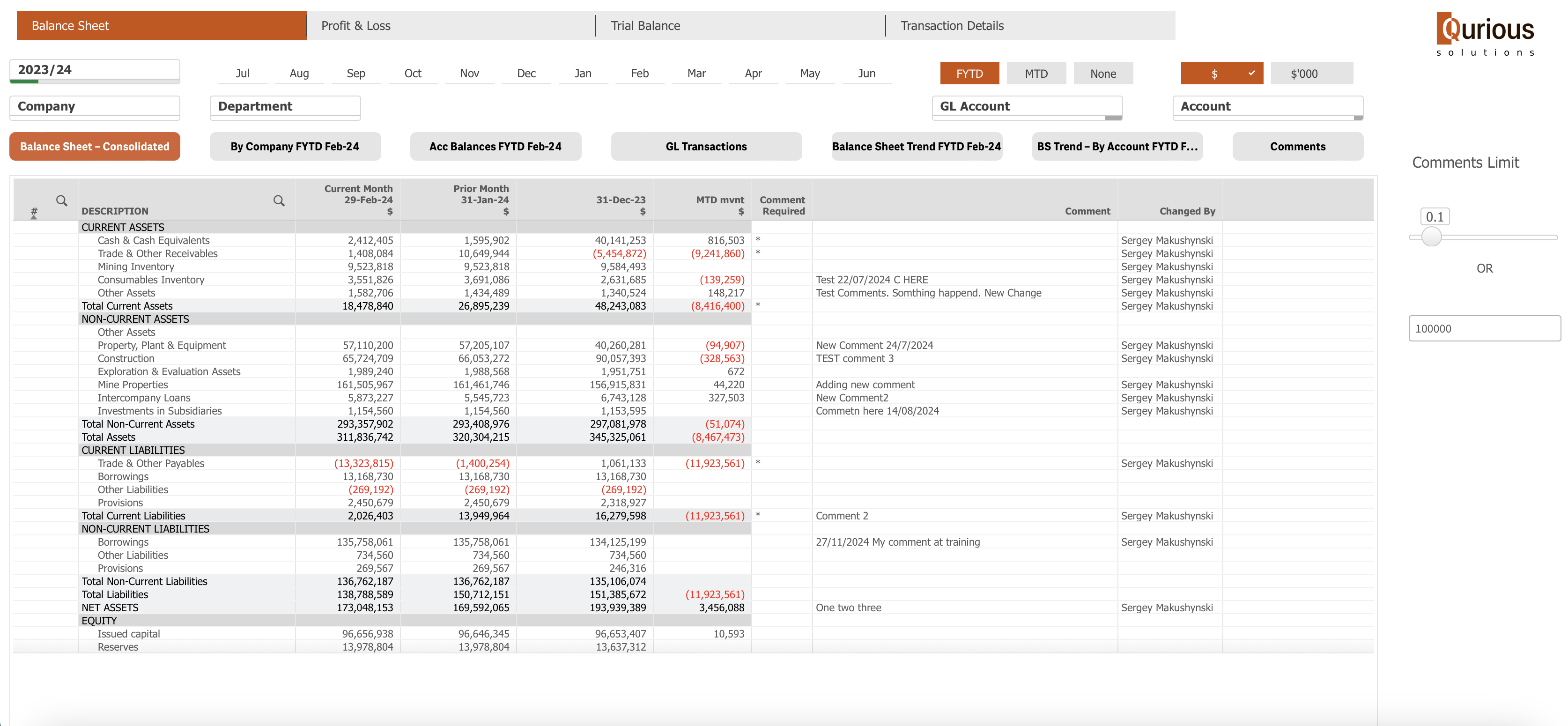
What if the P&L, balance sheet, trial balance and departmental reports were simply already there, refreshed hourly or on demand, waiting for you rather than the other way around?

What if the people responsible for a cost centre or a department could add their commentary on budget vs actual variances directly against the numbers, right when the variance appears, so the explanation exists at the moment it’s needed, not months later when someone finally asks?

And what if, once the numbers and the commentary were ready, a polished, board-ready report could be generated and downloaded or emailed out with a click, instead of being rebuilt in Excel from scratch every reporting cycle?

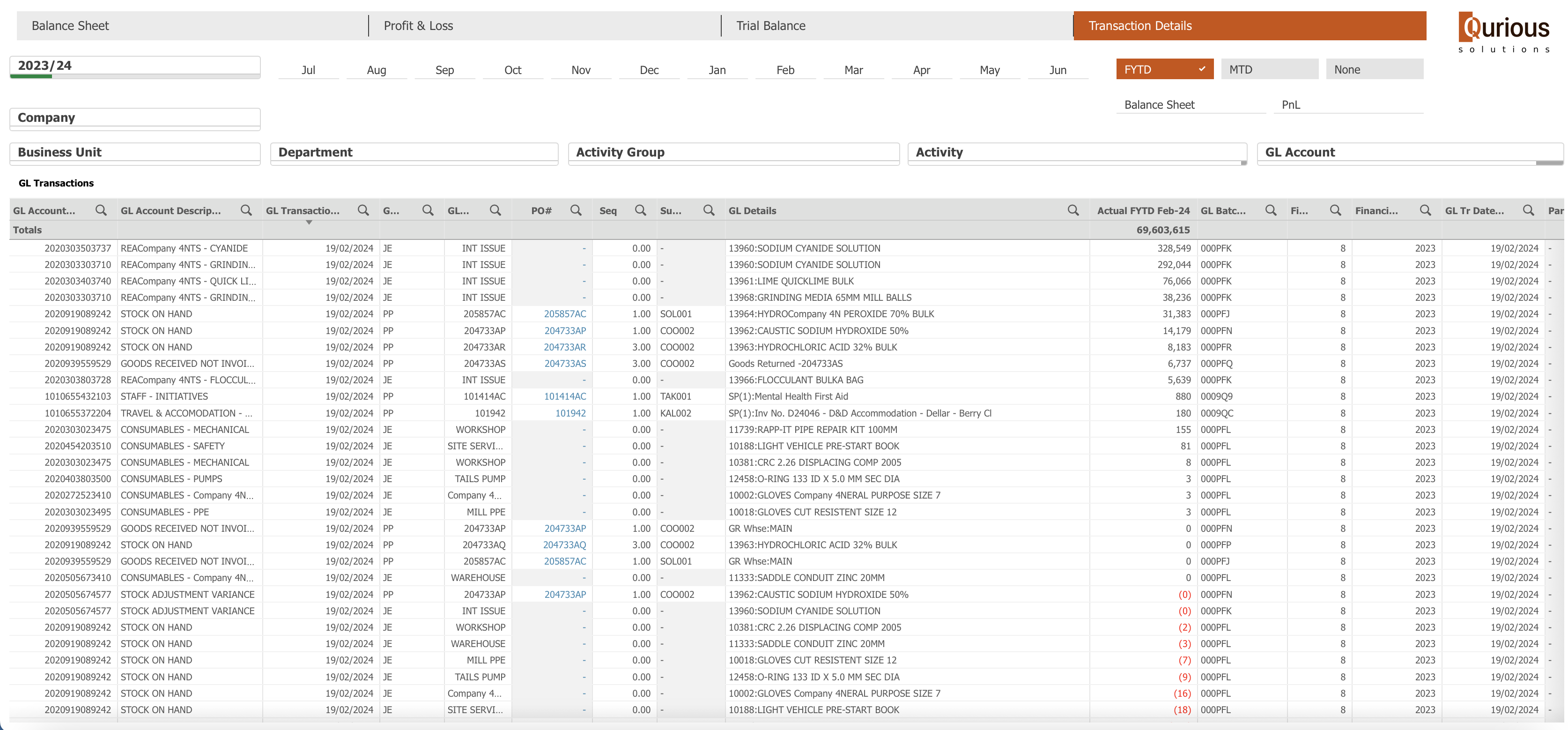
We built this financial reporting app specifically for Qlik and it works just as well in Power BI.  It sits on top of Pronto’s multi-entity structure and simplifies the process of “preparing the report”.  The data is always current and the formatting is consistent.  Furthermore, commentary is integrated with the numbers rather than scattered across emails.  This eliminates the need for spreadsheets to be reconciled at 9pm before a board meeting.

The real shift isn’t just time saved. It’s what that time gets spent on instead. Finance teams stop being report assemblers and start being analysts, because the reports are simply ready when they need them.

Facing a similar challenge? We'd be happy to help.

More To Explore

The website uses cookies to ensure  you get the best experience on our website. To find out more read our Privacy Policy